
Transforming Training in Healthcare Technology Through Experience Optimization
Enhancing the user experience of a Learning Management System by incorporating organizational change management processes to improve usability and engagement for healthcare professionals.
Cerner was an industry leader in healthcare technology, providing a widely used Electronic Medical Record (EMR) platform to allow portability and interoperability of an individual’s health information. With the new regulations and technology introduced to the medical industry, many healthcare professionals struggled with adopting these new mandatory tools into their everyday patient care.
Cerner established a Learning and Training division to create educational and training content and events that would assist healthcare professionals to gain proficiency with the new tools.
The Challenge
Cerner Corporation faced the challenge of building a platform that utilized sound organizational change management principles and proven learning and acceptance techniques to instill confidence in the new Electronic Medical Record (EMR) processes. The goal was to bolster the adoption of the new digital record process across a healthcare organization’s medical providers.
Project Overview
Beginning in 2014, the healthcare industry underwent a seismic change in how patient data was documented and shared. Through the Affordable Care Act and its “meaningful use” mandate, healthcare providers had to transition from familiar paper charts to computer screens for recording and sharing patient data. The introduction of the EMR became the primary method for this documentation.
Many practicing medical professionals with decades of experience in the industry met this new way of documenting, ordering, and scheduling with significant resistance. Adoption was slow and fraught with contention.
Initial interviews revealed that none of the roles in a medical facility had time for in-person training due to their current workload demands. Training had to be “just-in-time” and online, providing the greatest flexibility.
To deliver effective online education, Cerner’s online learning team developed the concept of “journeys”: targeted, scalable learning on key topics designed to build competency and confidence. These journeys would be managed within a modified learning management platform, combining several relevant online courses into a meaningful journey with a discrete beginning and end.
User Testing
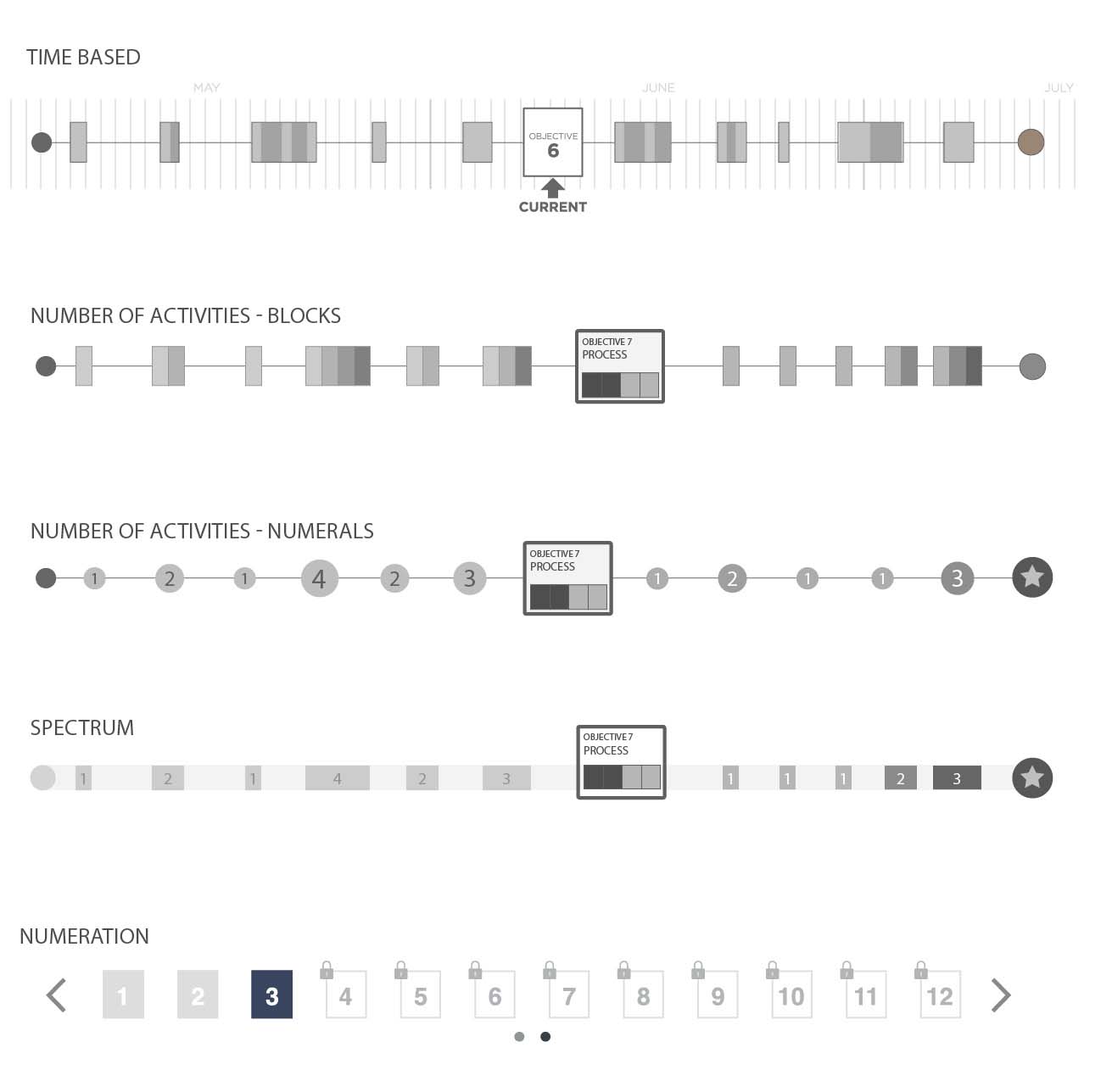
The project team conducted extensive research to understand the learners’ challenges, including user testing. They created rough prototypes to explore multiple visualization possibilities for the learning journey, focusing on time, complexity, scale, and stages.
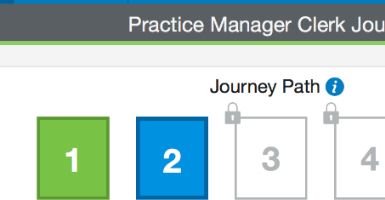
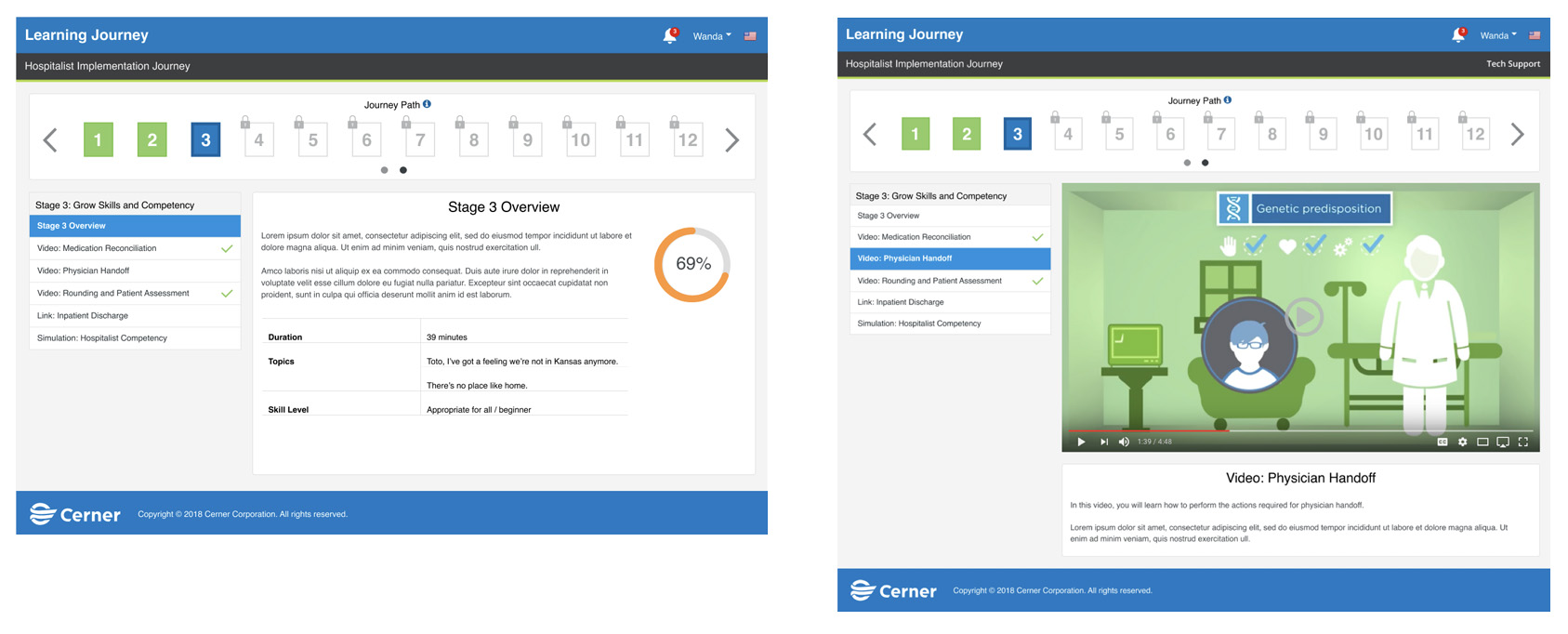
The research concluded that learners felt overwhelmed when presented with visualizations describing the scale of a stage or the time needed to complete it. However, learners responded more positively to visualizations that presented stages as enumerated “steps” with simple indications of what was completed, what was current, and what was locked until another stage was completed.
Content Management Planning
The platform to run these journeys required advanced tools beyond many learning management systems. It also needed robust data collection and reporting capabilities for the client’s executives and Cerner’s learning designers.
Building a journey was complex, requiring specific content types at each stage to build upon previous stages and set up subsequent stages, ensuring incremental learning progression. Due to the platform’s scope, the team began work on the manager platform before the user-facing application.
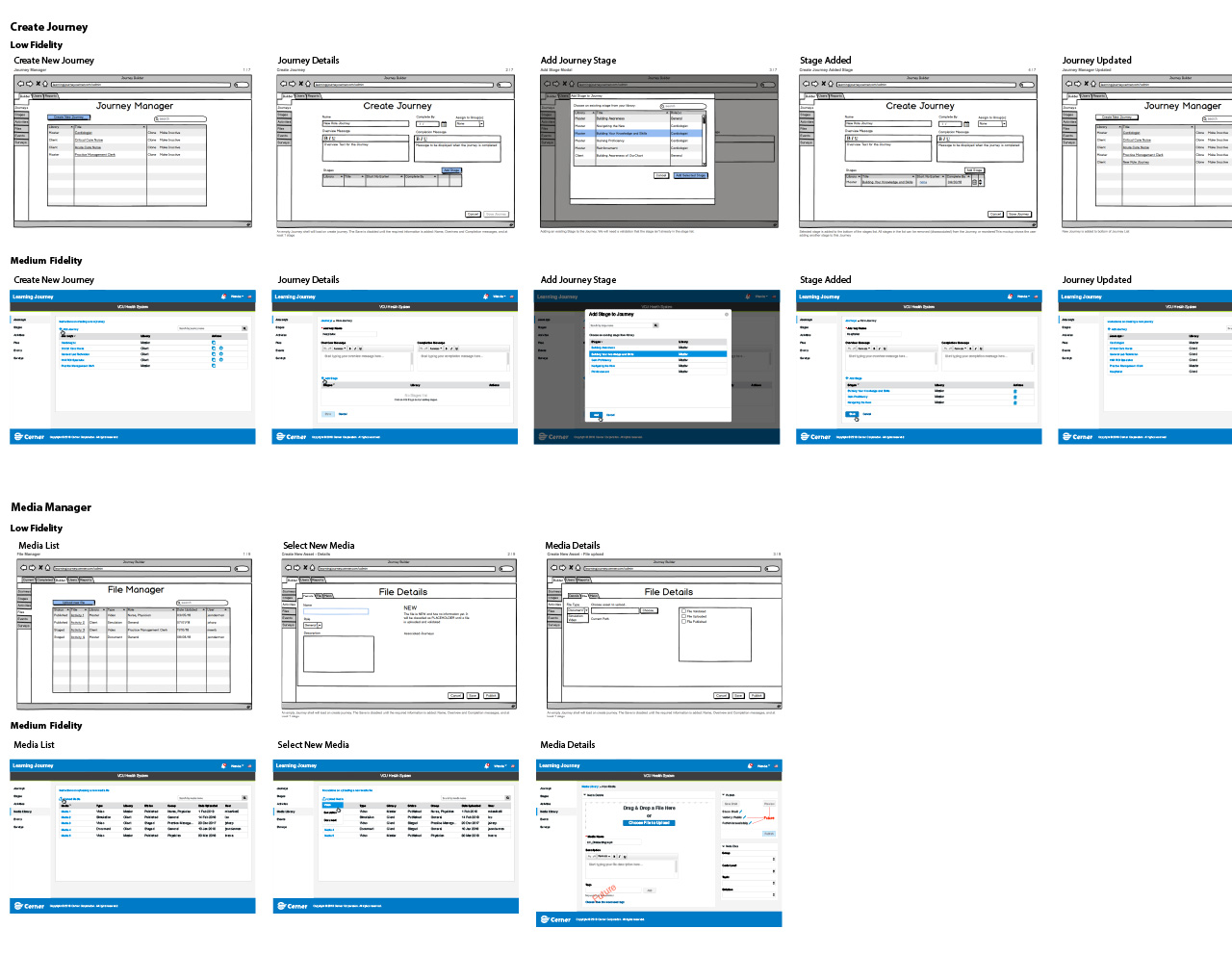
After gathering and analyzing business and technical requirements, the strategists and UX designers developed low-fidelity prototypes and flows to manage the extensive content and data. They utilized an atomic design approach, working from the smallest content chunks and building out to the full journey. This approach allowed engineers to focus on smaller blocks while the team defined and tested the next levels.
User Wireframes
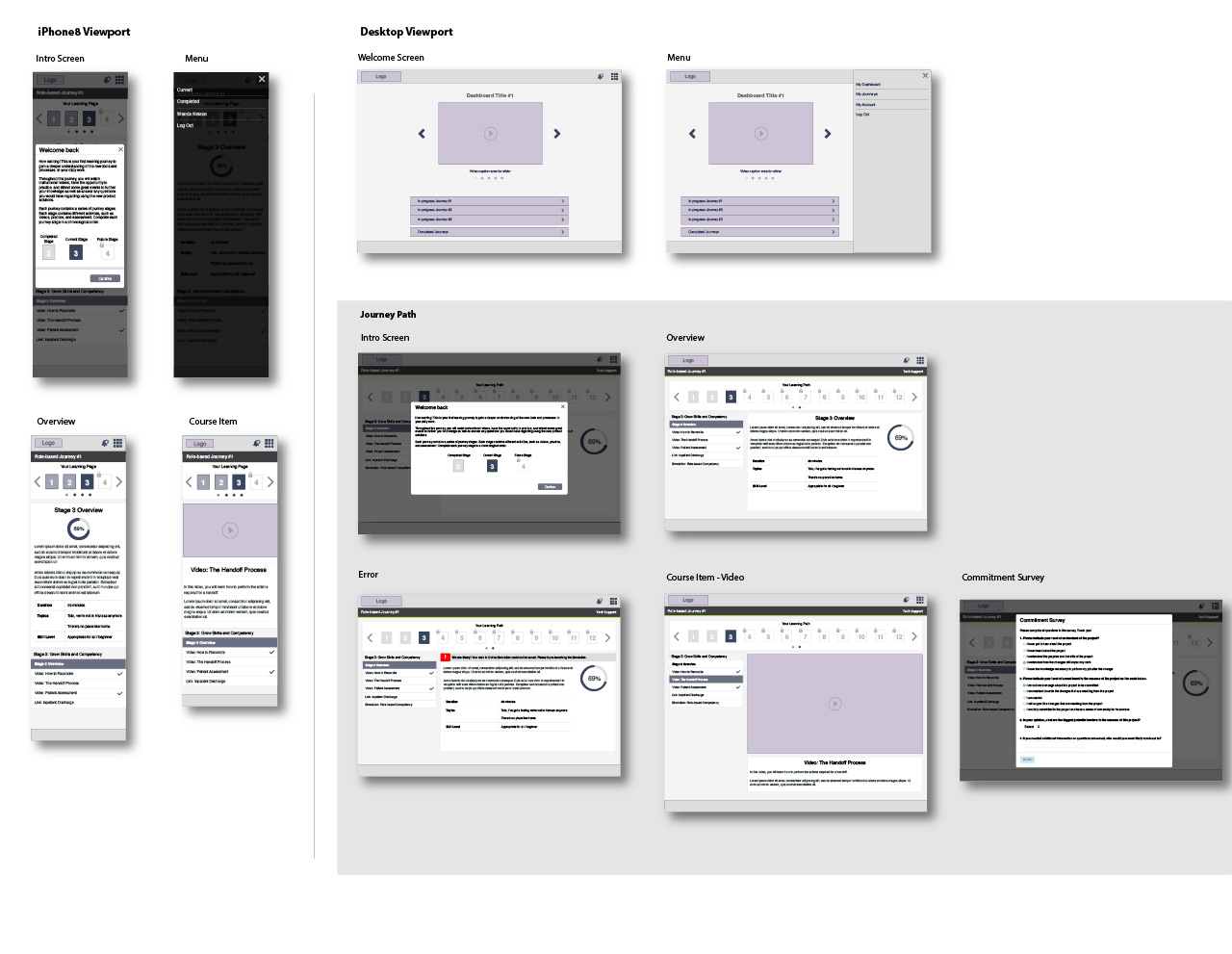
Following the analysis of user test findings, the UX team built wireframes for a sample journey. To keep pace with the project timeline and engineering, the team transitioned quickly from low-fidelity to medium-fidelity wireframes, enabling usability testing with enough time for iteration before the engineering team’s initial builds.
The wireframes were added to the design system, which had many interface elements defined. This minimized the need for creating new interactive elements and allowed for a speedy transition from accepted design to initial development build.
Conclusion
The initial build of the manager and user journey sites was launched in a beta phase with a key corporate partner. Working closely with this partner on journey development, deployment, and reporting, Cerner saw a marked improvement in workforce adoption and competency compared to the previous year’s in-person training.
The approach allowed users to engage in their learning “start small, grow big” and enabled self-directed learning at any time of the day. This empowerment led many learners to grow into learning leaders within their facilities.
Team
- User Experience
- Business Strategy
- Learning Design
- Partnership Management
- Clinical Leadership
- Engineering
- Data Architecture