
Thoughts on boredom, dwelling, and the art of being still
11:47 PM
Sarah’s thumb moved automatically, up and up and up, through an endless stream of videos, posts, updates, and images. The blue light of her phone cast shadows across her bedroom walls, and somewhere in the back of her mind, she registered that she should probably go to sleep. Work tomorrow. Early meeting. But something kept her scrolling.
She wasn’t sure what she was looking for anymore. Entertainment? Connection? A reason to finally put the phone down? Each post promised to be the one that would satisfy whatever itch she couldn’t quite name. A funny meme, a news update, a friend’s vacation photos, an influencer’s morning routine, thirty seconds of engagement followed by that familiar swipe upward, searching for the next hit.
But the something never came.
Three hours later, her eyes burned and her neck ached. She’d consumed hundreds of pieces of content, yet felt less informed, less connected, and oddly more restless than when she’d started. The strangest part? She felt like she’d been working, even though she thought she’d been relaxing.
Sarah finally set her phone aside with the nagging sense that she’d been somehow cheated. Not by any particular post or platform, but by something deeper, as if she’d spent the evening eating artificial sweetener when what her body actually craved was nutrition.
What Sarah didn’t know was that her experience had been diagnosed precisely, three thousand years ago, by a writer who’d never seen a smartphone.
The Ancient Diagnostician
The man they called the Preacher had seen it all. As king in Jerusalem, he’d had access to every pleasure, every distraction, every form of entertainment his era could offer. Wealth, wisdom, wine, women, building projects, gardens, servants, music: if it could be accumulated or consumed, he’d tried it.
And at the end of his experiment with satisfaction, he sat down to write his conclusions. His diagnosis was stark: “All things are wearisome, more than one can say. The eye never has enough of seeing, nor the ear its fill of hearing” (Eccl 1:8).
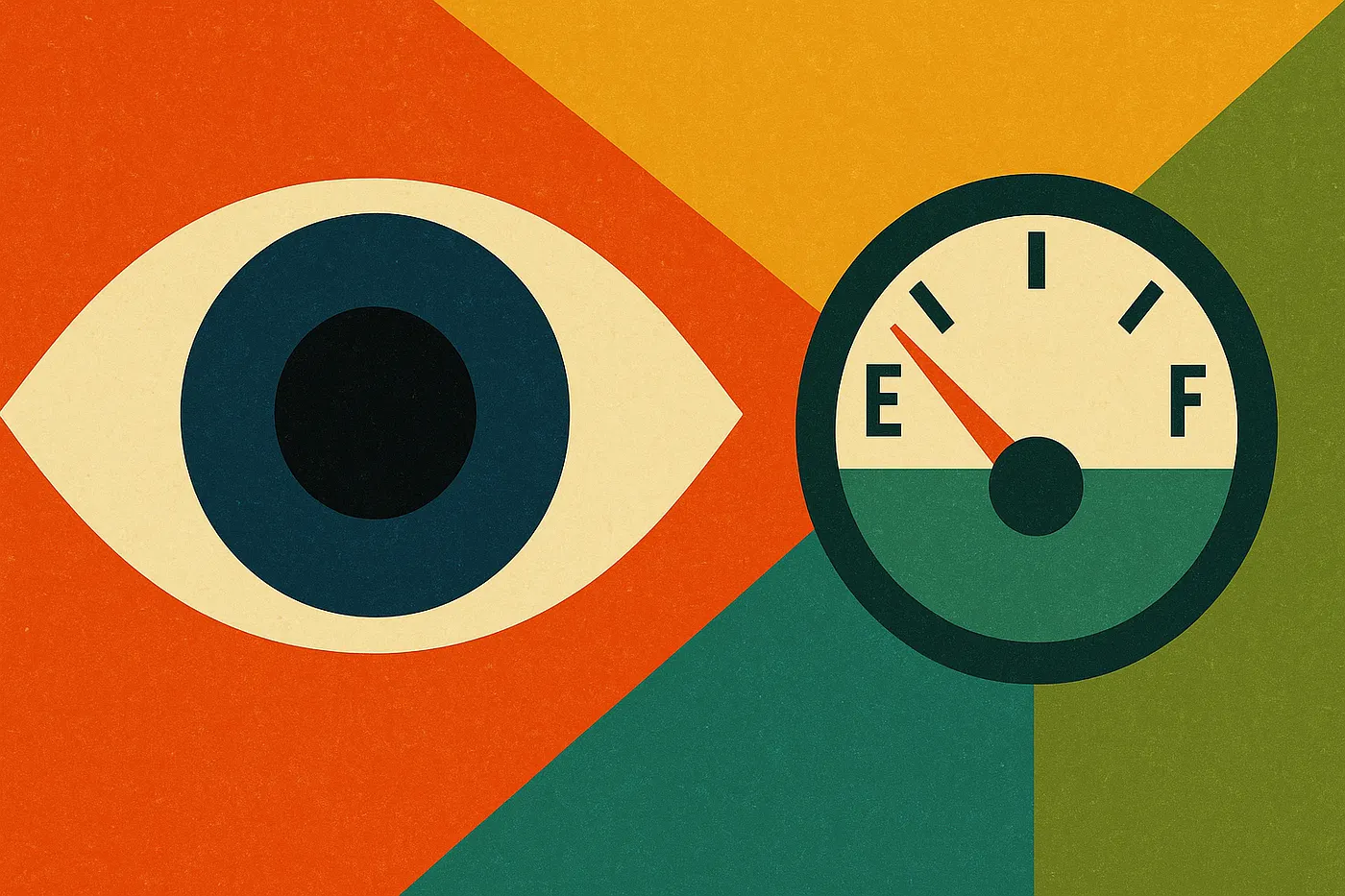
The eye never has enough of seeing.
If the Preacher could have peered forward through time to watch Sarah scrolling at midnight, he would have nodded with the weary recognition of someone who understood the human condition. He’d identified something fundamental: we are creatures whose appetites for stimulation can never be satisfied by stimulation alone.
This wasn’t moral judgment. It was anthropological observation. The same restlessness that once kept our ancestors alert to opportunities and dangers, the Preacher realized, was also what left them perpetually unsatisfied with whatever they’d already seen, heard, or experienced.
The eye never has enough. Not because it’s defective, but because it was never designed to be the soul’s primary feeding mechanism.
The Blogger’s Confession
Andrew Sullivan had thought he’d found the answer to ancient restlessness in modern connectivity. For over a decade, he’d been what we might now call a digital influencer, one of the internet’s early pioneers, publishing blog posts multiple times a day, seven days a week, building an audience of up to 100,000 daily readers.
Sullivan lived in what he called “an unending dialogue with readers who were caviling, praising, booing, correcting.” His morning routine began with “a full immersion in the stream of internet consciousness and news, jumping from site to site, tweet to tweet, breaking news story to hottest take, scanning countless images and videos, catching up with multiple memes.”
He was always connected, always current, always responding. He felt important, relevant, alive.
Until he didn’t.
“By the last few months,” Sullivan would later write, “I realized I had been engaging, like most addicts, in a form of denial. I’d long treated my online life as a supplement to my real life, an add-on, as it were. But then I began to realize, as my health and happiness deteriorated, that this was not a both-and kind of situation. It was either-or.”
The revelation hit him like a physical blow: “Every hour I spent online was not spent in the physical world. Every minute I was engrossed in a virtual interaction I was not involved in a human encounter.”
Sullivan had discovered what the Preacher knew: the eye never has enough of seeing because the eye isn’t what needs to be fed. We are beings with infinite longings trying to satisfy them with finite streams of content.
The Scientist’s Evidence
Jakob Nielsen didn’t set out to validate ancient wisdom. As one of the world’s leading usability researchers, he was simply trying to understand how people actually behave online. His team at Nielsen Norman Group spent years conducting eye-tracking studies, analyzing user behavior, and testing interface designs.
But what they discovered reads like a scientific translation of Ecclesiastes.
In study after study, Nielsen’s team found that infinite scrolling, the feature that powers our social media feeds, can make people feel like they’re “drowning in an information abyss with no end in sight.” Users become “paralyzed by the sheer volume of content” and often “view but not act.”
The research revealed something even more telling: web users spend 80% of their time looking at content above the page fold, with only 20% of their attention going to content below. Even more remarkably, their eye-tracking studies showed that user attention works like arriving at a page with “a certain amount of fuel in their tanks” that gets depleted as they scroll down.
Here’s what the platforms figured out: infinite scroll ensures the fuel never runs out because the page never ends. But the attention does run out. So users keep scrolling while becoming progressively less engaged, less satisfied, and more exhausted.
Nielsen identified what he called the “scroll bar lie”, the way infinite scroll breaks the normal interface that tells you where you are and how much content remains. Instead, it suggests you’re almost done when you’re not, that you’ve seen most of what there is when you haven’t.
The scientist had quantified what the Preacher observed: we chase after digital satisfaction believing it’s just around the corner: one more scroll, one more post, one more video. The interface promises completion while ensuring it never arrives.
The Pastor’s Recognition
John Mark Comer stood before his congregation in Portland, Oregon, watching hundreds of people simultaneously checking their phones during his sermon. Something was wrong. Not with his preaching, though he worried about that too, but with what he was witnessing: the systematic destruction of humanity’s capacity for silence, solitude, and sustained attention.
As the lead pastor of a megachurch in one of America’s most secular cities, Comer had a front-row seat to what he called “the ruthless elimination of hurry” that was actually eliminating something else entirely: the space necessary for human souls to breathe.
“All those little moments of boredom were potential portals to prayer,” Comer realized. The brief waits, the quiet drives, the unstimulated minutes between activities: technology had systematically filled every gap where the human spirit might encounter silence.
Comer began studying how Jesus had lived: constantly moving between community and solitude, engagement and withdrawal (Lk 5:16). “The wilderness isn’t the place of weakness,” Comer discovered, “it’s the place of strength.” Jesus regularly withdrew to lonely places for silence and prayer, not as escape from his mission but as preparation for it.
The pastor was rediscovering what contemplatives had always known: silence and solitude aren’t luxuries for the spiritually elite. They’re necessities for human flourishing. Without them, we become what Sullivan had become, what Sarah was becoming: manic information addicts searching for something that external stimulation can never provide.
The Convergence
Sarah would never meet the Preacher, or Sullivan, or Nielsen, or Comer. But their insights were converging in her midnight scrolling session in ways that would have astonished them all.
The ancient wisdom writer who diagnosed humanity’s fundamental restlessness. The usability researcher who quantified how digital interfaces exploit that restlessness. The digital pioneer who experienced the personal cost of information addiction. The pastor who recognized the spiritual discipline being systematically destroyed.
Different starting points, archaeological and scientific and experiential and theological, all arriving at the same recognition: we’ve engineered the perfect expression of humanity’s oldest spiritual problem.
The platforms haven’t created our restlessness. They’ve simply monetized it.
The Rich Fool’s Algorithm
Jesus once told a story about a rich man whose crops produced abundantly (Lk 12:16–21). The man’s response was to tear down his barns and build bigger ones, thinking, “I’ll store up plenty for many years. Then I’ll take it easy, eat, drink, and be merry.”
God called him a fool. “This very night your life will be demanded from you. Then who will get what you have prepared for yourself?”
The rich fool’s mistake wasn’t his wealth. It was thinking that accumulating more would somehow satisfy the restlessness in his soul. He kept building bigger barns for his grain, never realizing that no barn would ever be big enough.
Sarah’s phone was like a barn for content consumption. She accumulated views, likes, follows, saved posts, always thinking that a little more would finally scratch the itch. But the itch wasn’t informational or social.
It was existential.
The Laboratory of Dissatisfaction
What Sarah experienced that night, the strange exhaustion of endless consumption, the feeling of being busy without being productive, of being stimulated without being satisfied, was actually the result of a carefully engineered system.
Digital platforms have created what amounts to a laboratory for studying human dissatisfaction. They provide just enough stimulation to keep users engaged but never enough to actually fulfill the deeper longing. It’s like being fed a steady diet of artificial sweetener when what your body actually needs is nutrition.
The eye will never have enough of seeing because the eye isn’t what needs to be fed. The restlessness Sarah felt wasn’t a problem to be solved by better content curation. It was a signal pointing toward a different kind of satisfaction altogether.
Augustine had figured this out fifteen centuries earlier: “You have made us for yourself, O Lord, and our hearts are restless until they rest in you.” The restlessness isn’t a bug in human programming. It’s a feature. It’s the ache that points beyond itself, the dissatisfaction that suggests we’re made for something more substantial than endless consumption.
The Real Adventure
At 3 AM, Sarah finally put her phone down. As her eyes adjusted to the darkness, she became aware of things she hadn’t noticed during her scrolling session: the sound of rain on her window, the weight of her body against the mattress, the rhythm of her own breathing.
For a moment, she experienced something she’d almost forgotten: the sensation of simply being present in her own life, without consuming representations of other people living theirs.
In that quiet space, where external stimulation ends and internal life begins, Sarah glimpsed what the ancient writers knew, what the researchers had measured, what the digital refugees were seeking.
The Preacher who wrote about the eye never having enough also wrote about times and seasons: “For everything there is a season, and a time for every purpose under heaven” (Eccl 3:1). Perhaps what we need isn’t better content, but better timing. Times to engage, and times to step away. Times to consume, and times to simply be.
The eye may never have enough of seeing. But maybe that’s precisely why we need to occasionally close our eyes, and discover what we find in the darkness behind our eyelids, in the quiet space where the real adventure starts.
As Sarah drifted toward sleep, she made a decision that would have made all of them, the Preacher, the researcher, the blogger, and the pastor, smile with recognition.
Tomorrow, she would try something radical.
She would try doing nothing.
This is part of a series exploring boredom, stillness, and the ancient art of dwelling.
The Sources Behind the Story
The Characters:
- The Preacher: The author of Ecclesiastes, traditionally attributed to King Solomon, writing around 3rd century BCE
- Andrew Sullivan: Digital pioneer and author of “I Used to Be a Human Being” (New York Magazine, 2016)
- Jakob Nielsen: Usability researcher and founder of Nielsen Norman Group, pioneering studies on web user behavior
- John Mark Comer: Pastor and author of “The Ruthless Elimination of Hurry” (2019)
The Research:
- Nielsen Norman Group’s studies on infinite scrolling and user attention patterns
- Sullivan’s personal account of digital addiction and recovery
- Comer’s analysis of silence and solitude as spiritual disciplines
- Biblical insights from Ecclesiastes on human restlessness and satisfaction
Further Reading:
- Eccl 1:8: “The eye never has enough of seeing”
- Lk 12:16–21: The Parable of the Rich Fool
- Lk 5:16: Jesus’ practice of withdrawal to lonely places
- Eccl 3:1: “For everything there is a season”
- Odell, Jenny. How to Do Nothing: Resisting the Attention Economy
- Russell, Bertrand. “In Praise of Idleness”
- Svendsen, Lars. A Philosophy of Boredom