
A letter to designers in bad jobs: on patience, humility, and the career that unfolds when you’re not looking
If you’re stuck in a bad design job, watching Instagram designers with half your experience shipping work that looks twice as good as yours, and wondering if your career is already over, this is for you.
I’m in my 50s now (ouch) and, yes, finally doing work I’m proud of for the right reasons. But what about the decades before this? If you only see where I am now, you’ll miss the most important part of the story.
I spent my 20s as an elitist design jerk (maybe a bit into my 30s… yeah that really stings to admit). I chased originality over goodness, broke things digitally just to get recognized, and designed wildly experimental work with little practical sense. I was more interested in being noticed than being useful.
And I thought I was brilliant.
But I was actually just loud.
Then the dot-com crash hit, and the music stopped.
The Wilderness That Forms Us
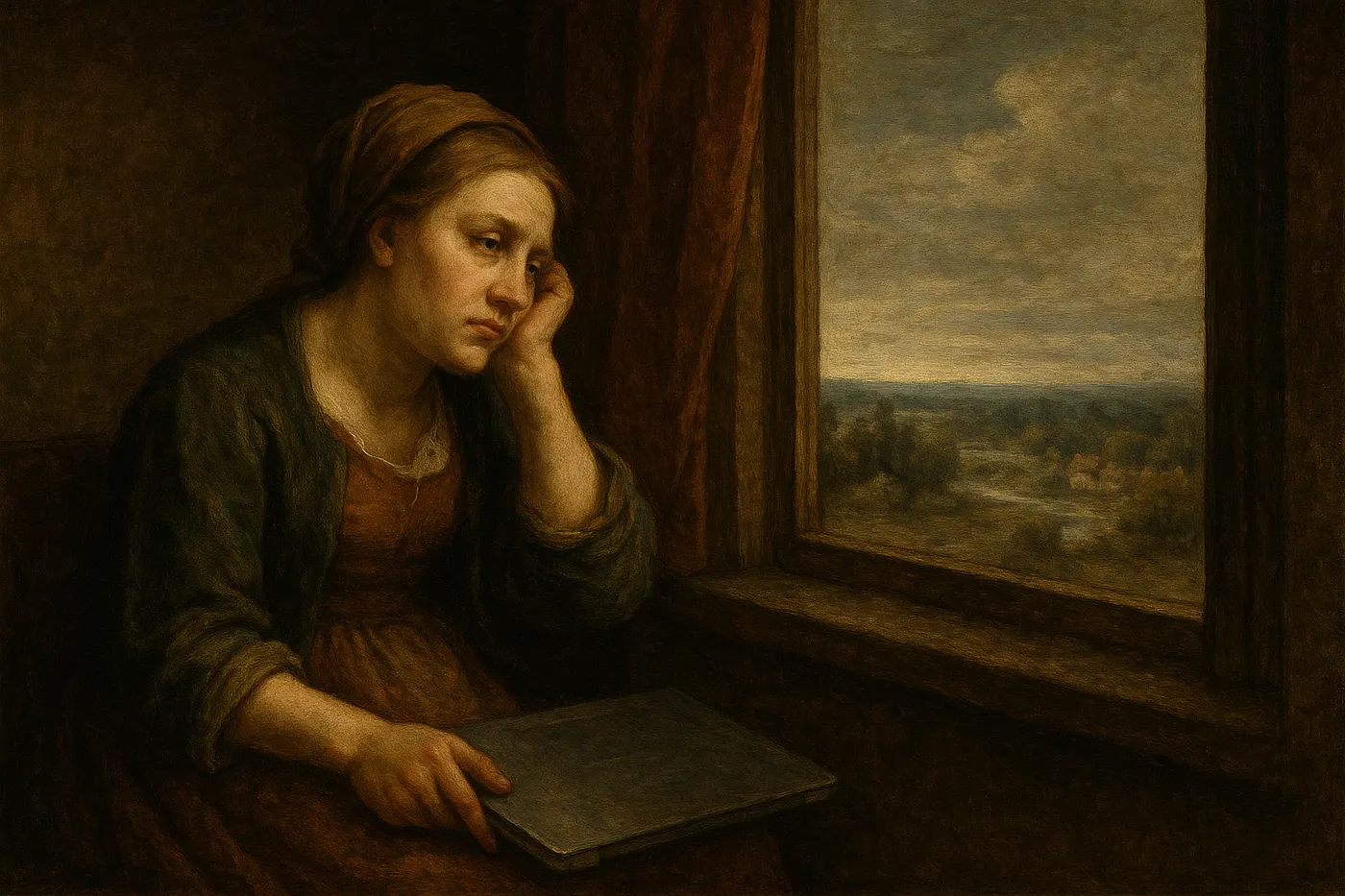
For three long years, I couldn’t get design work. I became a project manager, a role I was genuinely terrible at, just to pay bills. Three years of not designing. Of feeling like everything I’d built was gone. Of wondering if God had forgotten about me.
Yup, I’m a Christian (something that I became while in the wilderness), and I need to be honest: my faith didn’t make this easier. It didn’t bring me success or open doors faster. What it did was slowly, painfully condition my heart to be ready for success for the right reasons. The wilderness wasn’t punishment. It was preparation.
Joseph understood this. Sold into slavery at 17, falsely accused and imprisoned around 27, not released until 30, thirteen years between the dream and its fulfillment. Those years weren’t wasted. They taught him administration, resilience, Egyptian culture, and humility. When Pharaoh needed someone who understood both suffering and systems, Joseph was ready.
Paula Scher understood this too. She spent years feeling stuck doing album covers, uncertain if her career would ever amount to more. She didn’t join Pentagram until 42. Her most iconic work, the Public Theater identity, came at 44. She’s 76 now and still creating.
Moses spent forty years as an anonymous shepherd after fleeing Egypt in disgrace at 40. Forty years in the desert, stripped of his Egyptian arrogance, humbled and forgotten. At 80, when God called him to lead, the wilderness had made him ready, not through confidence but through humility.
Paul Rand ground through flashy editorial work in his 20s and 30s, work that felt small and limiting. But his enduring legacy, IBM, ABC, and UPS, came in his 40s, 50s, and 60s. He wrote his most profound book, Design, Form and Chaos, at 78. It took that long to understand what he’d been saying all along:
”Don’t try to be original; just try to be good.”
My three years as a terrible project manager taught me things I couldn’t learn any other way:
- I am not in control (the market humbles everyone)
- Work isn’t my identity (when design was taken away, who was I?)
- Empathy for people outside design (project management showed me how the other half thinks)
- That I actually loved design (absence reveals what matters)
But when I finally returned to design, I wasn’t healed yet.
I got obsessed with coding, and my designs became rigid, lifeless, practical… standard. I’d traded the idol of originality for the idol of technology. I was still serving the tool instead of the purpose. God was teaching me that tools serve purpose, not the other way around.
The wilderness strips us down so we can be built back up for the right reasons.
The Lie We Believe About Time
We think careers are linear. We think success comes early. We think if we’re not “arrived” by 35, we’ve missed it. Instagram reinforces this daily with 25-year-old design directors and viral portfolio pieces from people who graduated last year.
But look at the actual stories, both ancient and modern.
David was anointed king as a young man but didn’t take the throne until his 30s, spending years running from Saul, hiding in caves, waiting.
Alan Fletcher founded Pentagram at 41 after years of grinding in smaller studios, just another designer hustling for work.
Jesus himself didn’t begin public ministry until 30, after years of carpentry that Scripture barely mentions.
Erik Spiekermann started FontShop at 50, feeling frustrated with the industry. It became hugely influential. He’s 77 and still designing.
Stefan Sagmeister took his first sabbatical at 40, which completely transformed his practice. He’s 62 and continues pushing boundaries in ways his 30-year-old self couldn’t have imagined.
David Carson didn’t fully commit to design until his 30s. He was a sociology teacher first. Ray Gun magazine made him famous in his late 30s. Those “wasted” years teaching sociology informed everything that followed.
Massimo Vignelli redesigned the NYC subway at 42. His most celebrated corporate identities came in his 50s and 60s.
Neville Brody started bold in his 20s with The Face magazine, but he’s spoken about how that early work was more about rebellion than communication. Now 68, his mature work shows the restraint and intelligence that only comes with age.
The pattern is clear: Most designers’ best work comes later. Much later than Instagram would have you believe. And the same pattern runs through Scripture itself.
“There is a time for everything, and a season for every activity under the heavens… He has made everything beautiful in its time” (Eccl 3:1, 11).
“For the vision awaits its appointed time; it hastens to the end; it will not lie. If it seems slow, wait for it; it will surely come” (Hab 2:3).
The waiting isn’t wasted. The wilderness isn’t punishment. It’s preparation.
The Long Path from Knowledge to Wisdom
There’s a progression that can’t be rushed:
knowledge → experience → wisdom.
Knowledge comes in your 20s. You learn tools, techniques, trends. “I know Figma. I know design systems.” Young designers ask: “How can I make this look different, cool, award-winning?” I certainly did. I thought breaking things digitally and chasing originality was the whole game.
Moses at 40 had knowledge. He knew he was Hebrew, knew the injustice, knew how to wield Egyptian power. David knew how to fight Goliath. But knowledge isn’t wisdom.
Experience comes in your 30s and 40s. You apply those tools repeatedly, fail, learn what actually works. “I’ve shipped this 100 times.” Paul Rand grinding through editorial work, learning restraint. Joseph learning administration in Potiphar’s house and prison, understanding systems from the bottom up.
I moved into creative leadership in my 40s. Teaching others forced me to articulate why, not just what. I saw my old mistakes reflected in younger designers. I started to realize that wisdom isn’t something you learn. It’s something you become, slowly, through decades of humbling.
Wisdom comes in your 50s and beyond. You know why and when to apply what you know, and sometimes know when not to. “I know what this situation needs.”
Wise designers ask: “What does this need to communicate, and to whom?”
Moses at 80, stripped of arrogance, ready to lead with humility rather than force. Paula Scher’s most iconic work at 44+, informed by decades of commercial struggle. Paul Rand writing his most profound book at 78, finally able to articulate what he’d spent a lifetime learning. Matthew Carter creating Georgia and Verdana fonts in his 60s, typography refined by decades of understanding how people actually read.
Now, in my 50s, I’m finally designing for good. Not for me. Not for awards. Not for recognition. For the people who need the work to work. And I’m helping other designers avoid the traps I fell into.
It took me 30 years to understand what Paul Rand meant.
What Wisdom Looks Like
The wisdom that makes sound design has identifiable markers:
Humility: “This isn’t about me” “When pride comes, then comes disgrace, but with humility comes wisdom” (Prov 11:2).
Paul Rand: “Simplicity is not the goal. It is the by-product of a good idea and modest expectations.”
Restraint: “Just because I can doesn’t mean I should” Design isn’t art. It has a job to do. Context matters: “Who is this for?” Neville Brody’s mature work shows restraint his 20-year-old rebellion couldn’t imagine.
Patience: “This might take longer than I want” “There is a season” (Eccl 3:1).
Frank Gehry is 95 and still taking on major projects. Seymour Chwast is 93 and still creating.
Confidence Without Arrogance: “I know what works, but I stay teachable” “Instruct the wise and they will be wiser still” (Prov 9:9).
Joseph could interpret dreams but stayed humble. Moses led millions but called himself slow of speech.
What To Do in the Waiting
If you’re in a bad job right now, feeling stuck, here’s what I wish I’d known:
1. The bad job is teaching you something
My three years as a terrible project manager taught me empathy for non-designers, showed me I’m not in control, and revealed that I actually loved design. David Carson’s sociology teaching informed his design voice. Moses’ shepherding taught him to lead people, not just command them. Your bad job is your wilderness.
2. Keep developing your craft quietly
Don’t stop learning just because your day job is unfulfilling. Paul Rand didn’t stop thinking about design while in editorial work. Joseph didn’t stop learning administration in prison. David didn’t stop trusting God while hiding in caves.
3. Build relationships, not just portfolio pieces
Most opportunities come through people, not pixels. The designers who’ve lasted decades, Paula Scher, Erik Spiekermann, and Stefan Sagmeister, invested in community. Joseph’s relationships in prison positioned him for freedom. David’s time with his band of misfits prepared him to lead a nation.
4. Stay curious about things outside design
David Carson was a sociology teacher. Moses was a shepherd. Your “wasted” years might be forming your unique voice. The wilderness teaches things the studio never could.
5. Remember: Patience with a timeline that is not yours
If Paula Scher’s best work came at 44+ and Paul Rand wrote his profound book at 78, if Moses wasn’t called until 80 and Joseph waited 13 years, what makes you think your career could be over?
“Let us not become weary in doing good, for at the proper time we will reap a harvest if we do not give up” (Gal 6:9).
The Faith Piece: Formation Over Fame
I want to be clear: My faith in Christ didn’t bring me success. It didn’t make the wilderness shorter or the bad jobs better. It didn’t give me a magic pass to skip the hard parts.
What it did was condition my heart to be ready for success when it came, for the right reasons.
In my 20s, if I’d gotten the recognition I wanted, it would have destroyed me. I would have become insufferable. The humbling I experienced, the dot-com crash, the project management years, the coding obsession, those weren’t detours. They were the path.
Moses wanted to deliver Israel in his 40s through violence and his own strength. God made him ready to lead in his 80s through humility and dependence. Joseph dreamed of leadership at 17 but needed 13 years of suffering and character formation before he was ready at 30.
“We also glory in our sufferings, because we know that suffering produces perseverance; perseverance, character; and character, hope” (Rom 5:3–4).
God’s timing is different than our timing. I wanted to be great in my 20s. God wanted me to be good in my 50s. Those are different goals.
“Trust in the Lord with all your heart and lean not on your own understanding; in all your ways submit to him, and he will make your paths straight” (Prov 3:5–6).
The End of a Matter
“The end of a matter is better than its beginning, and patience is better than pride” (Eccl 7:8).
This rather unstructured article is to encourage you that you’re not running out of time. You’re just beginning to understand what time is for.
The wilderness isn’t the end of your story. It’s the middle. And the middle is where the real formation happens.
Be patient. Stay humble. Keep learning. Trust the process, and if you’re a person of faith, trust the One who’s authoring it.
The best might still be coming.