
Three threads through the work
Not a tour. Nothing here needs reading in order and no thread depends on another — each one just groups work that makes a single argument, with a note on why each piece belongs to it. Threads have their own pages if one of them is the only part you want to send someone.
If you only read one thingHarmony — a design system whose tokens are a contract an AI coding agent reads directly, with no translation step in between.It closes the design-systems thread below, and working backwards from it is a perfectly good way in.
Design systems, three times
Three systems, three organizations. Each one corrected something the previous attempt got wrong, which is easier to see laid end to end than inside any one of them. Fulcrum unified the design team and stopped at engineering’s edge. Uplift got further only because the real fix was organizational — its engineers reported into Development, and moving them under UX had to come before any component work did. Harmony is the first one designed for a reader that isn’t human. The arc is the argument.
The first attempt, and the one that stopped at the design team’s edge: a unified Figma library and a documentation site that engineering never picked up. What that gap cost is the argument the next two systems were built to answer.
 BetterCloud
How a shared design language cut prototype time by 40%, and what it revealed about cross-functional adoption.
How I led the design of Fulcrum, BetterCloud’s internal design system, unifying a fragmented SaaSOps product suite and learning firsthand what it takes to carry a design system across the boundary from design into engineering.
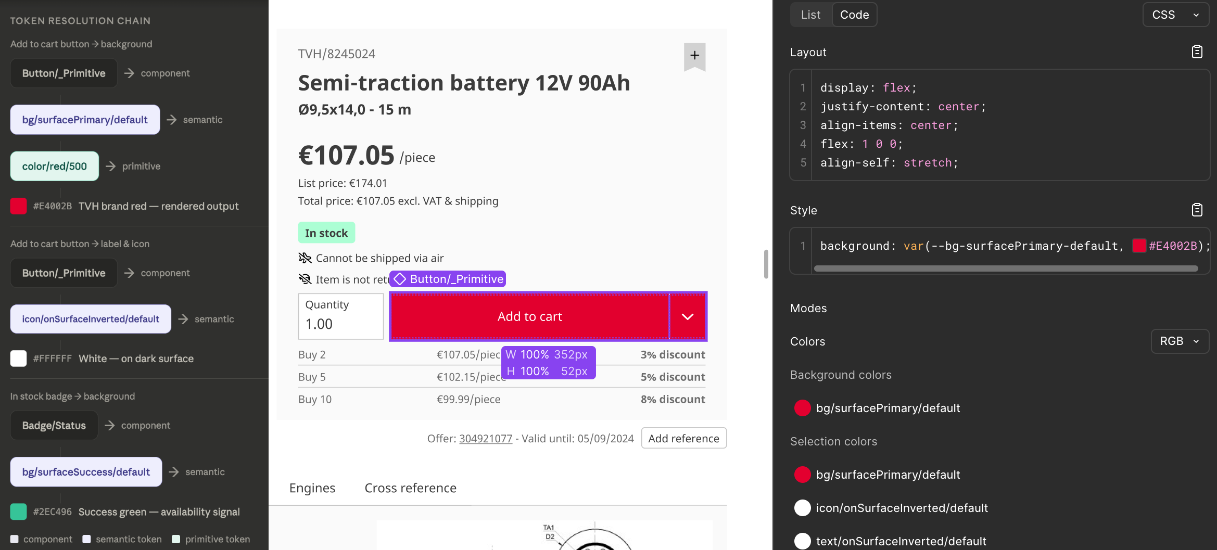
The second attempt, where the fix turned out to be organizational: the system was failing because its engineers reported into Development, so moving them under UX came before any component work did.
 TVH Parts Co.
How moving design system engineers under UX ownership, then co-designing governance with an engineering advocate, turned a neglected component library into shared infrastructure across four brand tech teams.
At TVH, a design system existed in name only. Engineers had stopped trusting it and were building their own components. Moving DS engineers under UX and co-designing governance with an engineering advocate stabilized the system and expanded it to four brand tech teams and 15 front-end developers, with a token architecture that would underpin the company’s planned international brand consolidation.
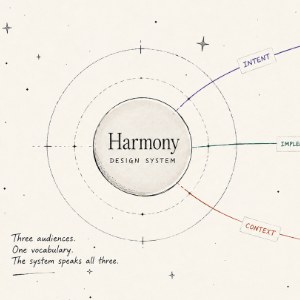
The third attempt, and the first one built for a non-human reader: tokens as a contract an AI coding agent consumed directly, not documentation someone had to translate first.
 Harmony Design System, Arcos, Inc
What happens to a design system when AI agents are first-class consumers, and how building two prior systems shaped the architecture that finally closes the gap.
What design systems become when AI is a first-class consumer, and what three companies of building them taught me about the architecture that closes the gap between human-readable and machine-executable.
Research that reframed the product
One case study, not a series. Two and a half months embedded across 14 utility sites produced a product direction rather than a features backlog, and then two rounds of scope cuts tested how much of that direction survived contact with a ship date. It’s the only thread here at this depth, and the honest reason is that there isn’t a second one. Padding it would read worse than the asymmetry does.
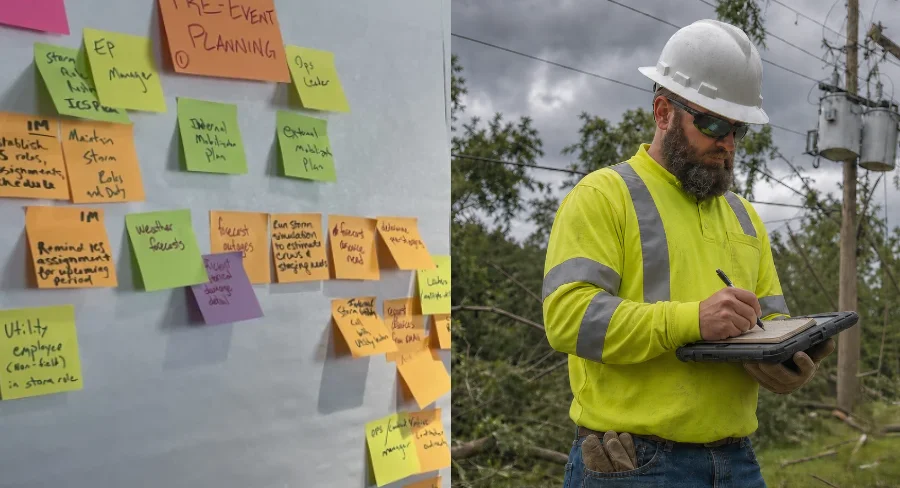
The research method: embedded fieldwork across 14 sites, synthesized into a reframed product direction rather than a features backlog.
 Arcos, Inc
How 2.5 months of embedded research across 14 utility sites reframed a greenfield product from the ground up, and what it took to ship that vision through two rounds of scope cuts.
As Head of UX and Lead Researcher, I conducted field research across 14 AEP operating companies, observing and interviewing 120+ emergency managers and field workers. That research reframed Arcos’s emergency preparedness platform, which shipped as Control Tower for the back office and Arcos Field for mobile, from UI modernization to a workflow-native system. I developed the “user lenses” product vision using AI-assisted prototyping in Lovable, then held that vision through two descoping rounds to ship the convoy tracking MVP in August 2025.
AI-assisted delivery, and what it changed
The handoff is where design intent goes to die, so that’s where the pipeline got rebuilt: two MCPs in one context window, and a spec generated from the design source instead of written alongside it. The first study is what changed. The second is what the pipeline revealed once it was running — a documented process becomes a training set, and the efficiency gain turns into a question about what the design function is actually for. The third is that model turned back on this site, including the page you’re reading.
The delivery model in full: two MCPs in one context window, a spec that got generated rather than written, and the stakeholder group that was still only partially convinced when Jason left.
Arcos, IncHow restructuring the design-to-dev pipeline at Arcos cut kickoff time from two weeks to three days: one shared design language for UX, engineering, and AI.
At Arcos, design specs were thorough but not executable. Developers made hundreds of small judgment calls per feature, and AI entering the pipeline automated the ambiguity instead of solving it. I built Harmony as a context-rich npm package paired with Storybook and Zeplin MCPs, giving UX, engineering, and AI a shared design language. Kickoff compressed from two weeks to three days; a testable coded concept came down to 12 hours instead of ~40.
What the pipeline revealed once it was running: a documented process becomes a training set, and the efficiency gain turns into a question about what the design function is for.
Arcos, Inc. UX Leadership & AI DeliveryWhat an AI-assisted delivery model revealed about where design creates its highest value, and why speed without clarity of purpose just accelerates the wrong thing.
When the delivery pipeline started working, the recovered capacity had to go somewhere. This is the story of what the efficiency revealed: the upstream problem of purpose, data shape, and user intent is harder and more valuable than the downstream one. And what it means when your team’s documented ways of working become the training set for an AI agent someone else built.
The same model turned on this site: three systems that looked reusable from a distance, and the reasoning about which one actually was. You are currently reading its output.
jason.sonderman.infoThis redesign shipped three systems that looked like one reusable pattern. They weren’t. Here’s how I figured out which one actually was, and extracted only that.
This site’s own redesign produced three candidate patterns worth reusing elsewhere: a static, agent-facing content layer; an intent-based lens entry system; and an offline fit-brief generator. Investigating them side by side showed they were architecturally independent, not one coupled idea. I extracted only the agent layer, the part with the highest reuse value and the clearest thesis, into a standalone template, and left the other two out on purpose.
- Artifact
agent-layer-template
qaContext, llms.txt generation, and the eval harness this site’s own agent layer runs — extracted and published as a GitHub template repo, so it’s a thing you can fork rather than a paragraph you have to take on faith.
(opens in a new tab)